High-precision customized hardware, structural accessories, and corporate procurement solutions


Analyzing structural demands across renewable energy, power transmission, and commercial construction sectors
Galvanized angle iron (L-profile structural steel) remains the backbone of heavy industrial framing, telecommunication towers, power grid expansion, and solar mounting substructures. As global infrastructure investments transition toward sustainable energy networks and resilient civil engineering, the demand for high-tensile, hot-dip galvanized (HDG) structural shapes has experienced an unprecedented surge.
Modern architectural and civil projects demand materials capable of maintaining structural integrity under harsh atmospheric exposures (C3 to C5 industrial/marine environments). Zinc-coated angle steel provides double protection: physical barrier protection against moisture and corrosive agents, and electrochemical (sacrificial) cathodic protection for cut edges or surface abrasion.
Global procurement teams must balance structural load capacity with chemical resistance. Custom angle iron fabrication encompasses precise slot punching, slotted hole geometry, custom angle lengths (up to 12 meters per single piece), slotted corner radius control, and specialized hot-dip zinc bath temperatures maintaining rigid metallurgic alloy layers (Gamma, Delta, and Zeta phases).
Leading EPC (Engineering, Procurement, and Construction) contractors mandate compliance with international standards such as ASTM A123/A123M, EN ISO 1461, ASTM A36, EN 10025 S275JR/S355JR, and GB/T 700 / GB/T 1591. Selecting a verified manufacturer ensures long-term lifecycle savings and zero structural failure over decades of field service.
Technical Insight: Hot-Dip Galvanizing creates a metallurgical bond between steel and zinc. The reaction yields multiple iron-zinc alloy layers that are physically harder than the base carbon steel itself (exceeding 200 HV hardness), guaranteeing high mechanical impact and abrasion resistance during transit and site installation.
How Chinese automated mills achieve superior cost-efficiencies, strict quality assurance, and high-volume delivery timelines
Chinese integrated steel facilities leverage direct access to primary blast furnaces and continuous rolling mills. By sourcing prime billets directly and operating continuous hot-rolling lines, production waste is minimized, yielding an unmatchable cost-to-strength ratio for standard and non-standard equal/unequal angle sizes.
State-of-the-art factories employ fully automated acid-pickling, fluxing baths, and temperature-controlled zinc kettles (445°C to 455°C). Integrated CNC punch, notch, and laser-cutting lines ensure dimensional tolerance within ±0.5mm, streamlining on-site assembly for transmission towers and prefabricated structural frames.
Every batch undergoes rigorous non-destructive and destructive testing: magnetic thickness gauge testing for coating thickness, salt spray testing (ASTM B117), bend test for adhesion, and Spectro chemical analysis of steel grade composition, guaranteeing full trace-ability from billet to finished beam.
Comprehensive reference data for structural steel grades, mechanical properties, and galvanization coating requirements
| Parameter | ASTM Standard (USA/Americas) | EN Standard (Europe/International) | GB Standard (China Export Grade) | Technical Performance Criteria |
|---|---|---|---|---|
| Steel Grade Equivalent | ASTM A36 / ASTM A572 Gr. 50 | EN 10025 S275JR / S355JR | GB/T 700 Q235B / Q355B | Yield strength ($R_{eH}$): 235 - 355 MPa; Tensile Strength ($R_m$): 360 - 630 MPa |
| Galvanizing Standard | ASTM A123 / A123M | BS EN ISO 1461 | GB/T 13912 | Hot-dip galvanized coating thickness range: 45 µm to 100 µm (325 g/m² to 705 g/m²) |
| Dimensional Tolerances | ASTM A6 / A6M | EN 10056-2 | GB/T 706 | Leg length tolerance ±1.0mm to ±2.5mm; Thickness tolerance ±0.3mm to ±0.75mm |
| Corrosion Resistance Life | C3 Environment: > 50 Yrs C5 Environment: 20-30 Yrs |
C3 Environment: > 50 Yrs C5 Environment: 20-30 Yrs |
C3 Environment: > 50 Yrs C5 Environment: 20-30 Yrs |
Determined by micron thickness of total Iron-Zinc alloy layers ($Eta, Zeta, Delta$) |
| Custom Fabrication Capability | Pre-galvanized hole punching, slots, bevel cutting, customized corner radius, notched legs, welded assemblies |
Proven utility of customized angle iron in critical structural installations nationwide and internationally
Custom punched galvanized angle profiles act as critical foundation purlins, torque tubes, and support legs for utility-scale solar farms. The heavy zinc coating prevents soil corrosion in aggressive ground conditions and withstands high wind torque forces without twisting.
L-shaped steel angles provide high slenderness ratio strength for power line pylons and substation frameworks. Precision-drilled or punched mounting holes allow fast tower erection in remote terrains without requiring field welding or anti-corrosion touch-ups.
Engineered equal and unequal legs are widely utilized as lintels, curtain wall trusses, roof joists, and floor decking support. Their high load-to-weight ratio minimizes dead weight on foundation piles while ensuring long-term structural integrity.
In high-salinity coastal dock structures, seawalls, and storage facilities, thick-coat HDG angle iron (100µm+ coating depth) stops chloride-induced pitting corrosion, extending structural service lifespans under continuous salt spray exposure.
Sub-zero logistics facilities utilize galvanized framing to prevent structural weakening caused by moisture condensation, thermal cycling, and frost formation, outperforming traditional painted carbon steel components.
Heavy machinery manufacturers utilize custom-length welded angle frames as robust base skids. The structural rigidity supports dynamic machine vibrations while preventing rust discoloration during overseas sea transport.
Built on 30 years of global trade, strategic partnerships, and certified quality management systems
Beijing Andy Culture Development Co., Ltd. (Andy Culture) was established in 1995, backed by 30 years of professional expertise in custom branded materials, structural products, and cultural/creative global supply chains. As a fully qualified foreign trade enterprise, we serve institutional, corporate, and EPC clients across Asia, Europe, Africa, and the Americas.
Customer-oriented and quality-driven is our consistent principle. We operate with a professional team of over 20 experts spanning engineering design, metallurgic quality control, international logistics, and global procurement—providing turnkey, end-to-end solutions from dynamic drawing conceptualization to site delivery.

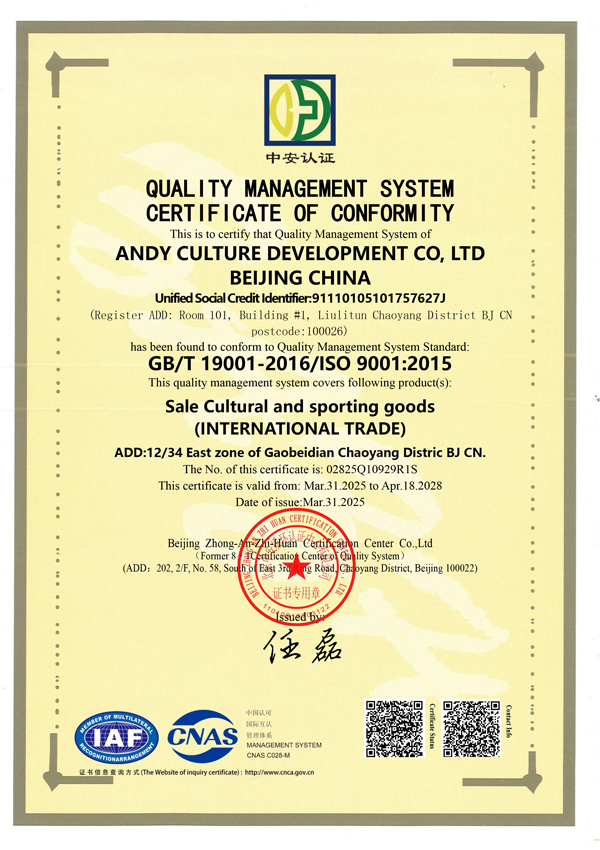
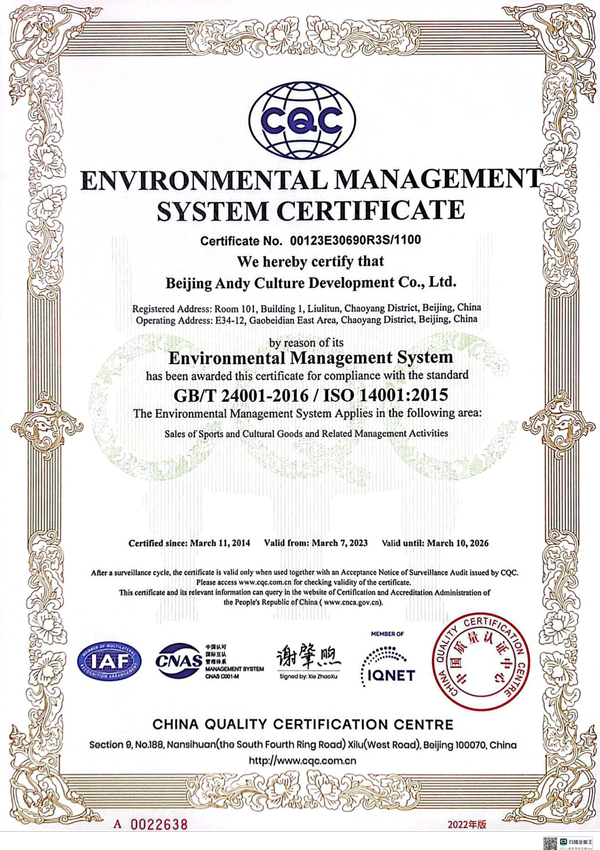

Key quality verification steps for B2B buyers, EPC procurement heads, and import managers
Always verify raw material origins via EN 10204 3.1 Mill Test Certificates. The certificate must document chemical analysis (Carbon, Manganese, Silicon, Phosphorus, Sulfur equivalents) and mechanical testing (Yield point, Tensile strength, Elongation percentage, Charpy V-notch impact values).
Conduct magnetic coating thickness tests according to ASTM E376. Ensure inspection covers web, flange, and corner radii. Adhesion must be checked via the pivot hammer test or knife test to verify zero flaking between steel substrate and coating.
Angles must strictly meet out-of-square tolerance (90° ± 1.5°) and camber/sweep limits (maximum 0.2% of total length). Improper straightness will lead to assembly misalignment in bolted steel towers and building frames.
Require steel-strapped bundling with edge protectors, waterproof plastic wrapping, and active desiccant bags inside sea containers. Proper ventilation or chromate passivating treatment prevents "white rust" (zinc hydroxide formation) during oceanic transit.
The evolution of zero-emission zinc coating technology and high-strength micro-alloy steel profiles
Incorporating micro-alloying elements like Nickel and Aluminum (e.g., Zinc-Aluminum-Magnesium ZAM coatings) reduces bath fluid consumption, increases salt-spray resistance by 3x compared to pure zinc, and allows lighter coating weights for eco-conscious construction projects.
Transitioning from basic Q235 carbon steel to micro-alloyed grades (S355, S460, Q420) allows engineers to reduce structural thickness while maintaining overall load-bearing capacity. This significantly reduces total steel tonnage and shipping freight costs.
Automated integration between 3D Building Information Modeling (BIM) software and multi-axis laser cutting equipment enables complex 3D slotted angles to be pre-cut directly from CAD models, achieving zero-waste factory fabrication.
Expert solutions to common engineering, galvanizing, and global trade questions
Complete product range for global business partners and institutional procurement
Visual presentation of operational activities, client engagements, and product categories




 Andy Culture